
The week before finals is the most high-stakes study period of the semester. Done right, it consolidates everything you’ve learned and gives you confidence walking into the exam. Done wrong, it’s a panicked spiral that leaves you more confused than when you started.
Here’s a day-by-day plan that works.
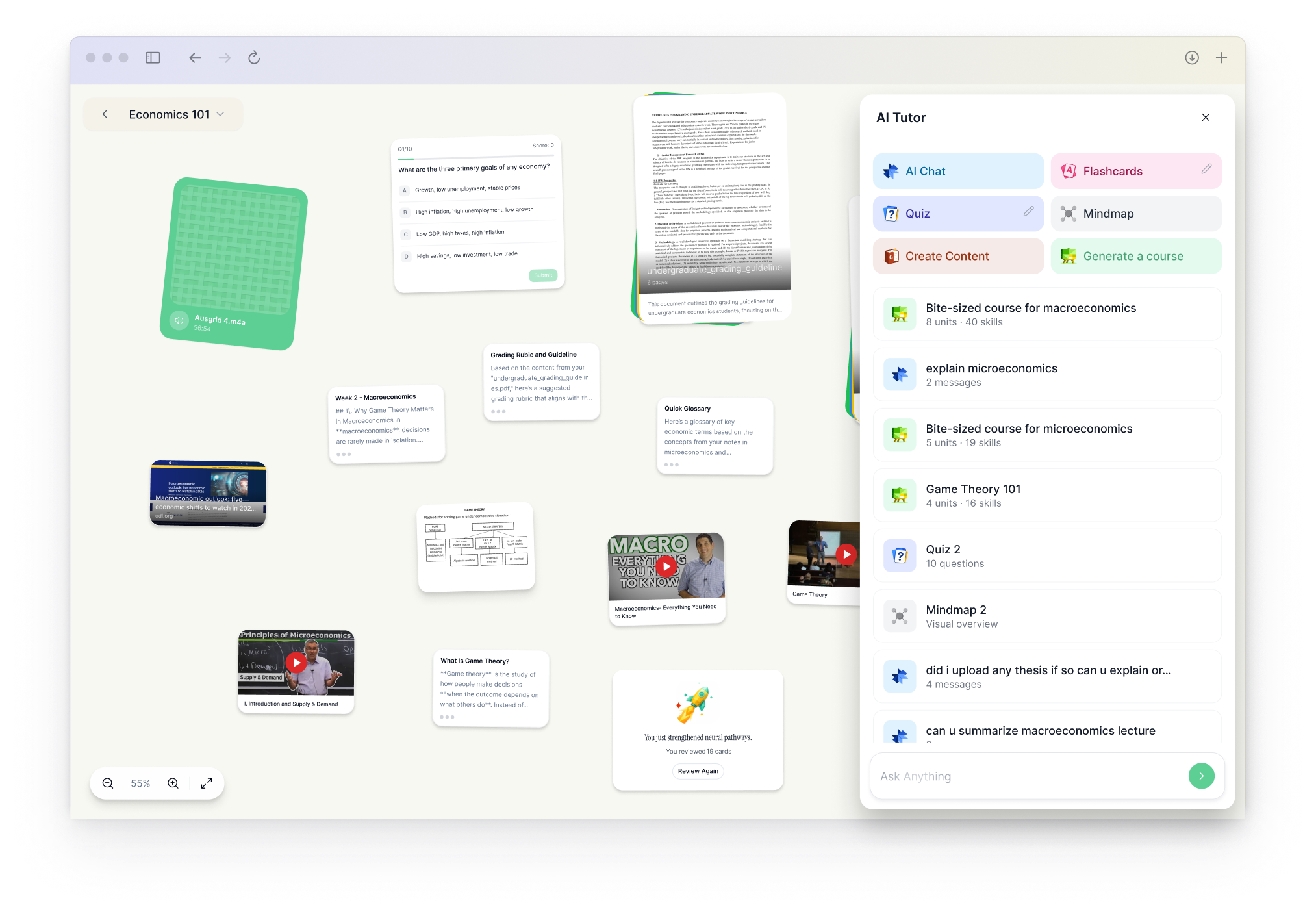
Try Duetoday free
Turn your lectures, PDFs and YouTube videos into notes, flashcards and quizzes in seconds.
Get started free →Before the Week Starts: Sunday Setup
Morning: Gather all your materials. Every set of lecture notes, every PDF, every past paper for every exam you have. Upload everything to Duetoday if you haven’t already. Generate AI notes for any lectures you haven’t yet processed.
Afternoon: Map your exams. Write down each exam date, the weighting, and an honest self-assessment of how prepared you are for each one.
Evening: Build your week’s schedule. Assign each day a primary subject based on exam date and difficulty. The subject with the earliest or most difficult exam gets the most time.
Monday: Full Diagnostic
Goal: Identify exactly what you know and what you don’t.
Take a practice exam or a full practice quiz for your first subject under timed, notes-closed conditions. Don’t look anything up until you’ve finished.
Review every wrong answer. Don’t just read the correct answer — understand why you got it wrong. This is your study target list for the rest of the week.
Evening: Do a lighter review session for your second subject — read through your summary notes, not your full notes.
Tuesday: Deep Dive on Weak Areas (Subject 1)
Goal: Close the gaps identified on Monday.
Spend the day focused exclusively on your Monday study targets. Re-read the relevant sections, ask the AI tutor to explain anything that still doesn’t make sense, and add new flashcards for the concepts you missed.
By end of day, run through your full flashcard deck for subject 1. Focus on the new cards from today.
Evening: Repeat Monday’s diagnostic approach for subject 2 — full practice quiz, notes closed.
Wednesday: Deep Dive on Weak Areas (Subject 2) + Consolidation (Subject 1)
Morning: Address weak areas from subject 2’s Tuesday diagnostic.
Afternoon: Return to subject 1 for consolidation. Run through flashcards, focusing on cards you’ve previously struggled with. Do a second, shorter practice quiz to check whether Tuesday’s work closed the gaps.
Evening: Light review of subject 3 if you have one.
Thursday: Integration and Application
Goal: Stop studying individual facts and start connecting them.
This is the day for the big picture. Review your summary notes for each subject and ask yourself: how do these concepts connect? What are the most likely essay questions or application problems?
Use Duetoday’s AI tutor to discuss the themes of each subject — ask it about likely exam angles, how to structure an argument, or what the key debates are in the field.
Do a second full practice quiz for each subject. Your scores should be noticeably higher than Monday and Tuesday.
Evening: Flashcard review across all subjects. Weak cards only.
Friday: Final Review and Consolidation
Goal: Reinforce what you know; don’t introduce new material.
Light, confident review day. Go through your summary notes for each subject one final time. Run a short flashcard session focused only on your persistent weak areas.
Do not start new topics today. If there’s something you genuinely haven’t covered, make a pragmatic decision: can you meaningfully learn it in one day? If not, accept it’s a gap and focus your energy on what you know.
Evening: Rest. This isn’t the time to study until midnight. Your brain needs recovery before exam performance.
Saturday (Day Before Exam):
Follow the night-before exam routine: one 90-minute review session focused on weak areas, light summary reading, stop by 9–10pm, sleep.
Key Principles for the Week
Don’t try to learn everything. The week before finals is for consolidation, not comprehensive coverage. Accept that there will be gaps.
Prioritise ruthlessly. Not all content is equally likely to appear in an exam. Focus on the highest-probability topics first.
Use AI to speed up the prep work. Generating flashcards, creating practice quizzes, and getting explanations from Duetoday should take minutes, not hours. Use the time saved for actual retrieval practice.
Sleep every night. Non-negotiable. Sleep deprivation tanks both memory consolidation and exam performance. Seven hours minimum every night of finals week.
FAQ
Q: What if I have multiple exams on consecutive days? A: After each exam, do a brief review of the next exam’s material before bed. Don’t debrief the exam you just sat — it’s done. Focus entirely on what’s next.
Q: Should I study new material in the week before finals? A: Only if it’s a topic that’s very likely to appear and you haven’t touched it yet. Otherwise, consolidation of what you know is more valuable than shallow coverage of new content.
Q: How many hours should I study per day finals week? A: 6–8 hours of focused study per day is the effective maximum. Beyond that, quality drops dramatically. Better to study 6 focused hours than 10 distracted ones.
Q: What if I’m significantly behind when the week starts? A: Triage ruthlessly. Identify the highest-value topics for each exam, generate AI summaries of those specific areas using Duetoday, focus entirely on those, and accept that some areas won’t be covered.
Q: Is it worth forming study groups for finals week? A: For some subjects and some people, yes. Group study works well for discussing application problems and testing each other. It works poorly for the quiet retrieval practice that drives exam performance. Combine both.