The night before an exam, most students are doing one of two things: panicking and cramming, or paralysed and doing nothing. Both are wrong. There’s a middle path that’s actually backed by research — and AI has made it significantly more effective.
Here’s exactly what to do in the 12 hours before your exam.
Try Duetoday free
Turn your lectures, PDFs and YouTube videos into notes, flashcards and quizzes in seconds.
Get started free →The Core Principle: Consolidation, Not Cramming
Your brain consolidates memories during sleep. The night before an exam isn’t the time to load in new information — it’s the time to lightly reinforce what you already know so it’s accessible the next morning.
Cramming new material the night before creates two problems. First, it’s unlikely to stick in long-term memory with only one review cycle. Second, it can create interference — where new, poorly-learned information disrupts recall of things you knew well.
The goal is activation, not acquisition.
6pm–7pm: Eat a Proper Meal
This sounds obvious, but students skip it constantly. Your brain needs glucose to function. A proper meal with protein and complex carbs sets you up for the study session ahead and for better sleep. Don’t eat junk food that’ll spike and crash your energy.
7pm–8:30pm: The Core Review Session
This is the only serious study block of the evening. One and a half hours max.
What to review:
- Your weakest areas from practice quizzes earlier in the week
- Any concepts you’ve flagged as uncertain in your notes
- Key formulas, dates, or definitions that require precise recall

Use Duetoday’s flashcard system for this session. Focus only on cards you’ve previously marked as difficult. Skip the ones you know well — reviewing them wastes time and gives you false confidence about the session.
If there’s a concept you still can’t get your head around, spend no more than 10 minutes on it. Ask the AI tutor to explain it from a different angle. If it still doesn’t click, accept that it might not be fully solid and move on. Spending 45 minutes on one uncertain topic is a poor trade for the exam.
8:30pm–9pm: Light Review of Your Summary Notes
Read through your master summary notes — the structured overview of each topic, not your full notes. You’re not reading to learn; you’re reading to remind yourself of the shape of the content. This is pattern recognition, not memorisation.
This session should feel comfortable. If it feels stressful, you’re reading too deeply. Stay at the headline level.
9pm: Stop Studying
This is the hardest part for most students. But the research is clear: continuing to study past the point of diminishing returns — which arrives quickly the night before an exam — does not improve performance. It delays sleep, which genuinely does impair performance.
Close your notes. Close your laptop.
9pm–10pm: Recovery Time
Do something that’s genuinely restful. Not doom-scrolling (that’s stimulating, not restful). Not watching a stressful show. Something low-stakes: a walk, a conversation, a familiar TV episode you’ve seen before, light stretching.
This helps your nervous system come down from study mode and prepares your brain for sleep.
10pm: Prepare Everything for the Morning
Before you sleep, sort the logistics:
- Set two alarms
- Lay out your clothes
- Pack your bag (ID, stationery, water)
- Check the exam location and start time
- Know your travel time
Doing this now means you wake up to zero decisions and zero stress about logistics.
10:30pm: Sleep
Aim for 7–8 hours. This is non-negotiable. Memory consolidation happens during slow-wave sleep. The research on sleep and exam performance is unambiguous: well-rested students significantly outperform sleep-deprived students even when the sleep-deprived student studied more hours total.
If you struggle to fall asleep due to anxiety, try box breathing: inhale for 4 seconds, hold for 4, exhale for 4, hold for 4. Repeat for 5 minutes.
The Morning of the Exam
Wake up with enough time to eat, get ready without rushing, and arrive at the exam venue 10–15 minutes early.
A brief 15-minute glance at your summary notes is fine. No new material. No cramming. Just a calm activation of what you already know.
Trust the preparation you’ve done over the past weeks. The night before is about sleep, not heroics.
What This Routine Assumes
This routine only works if you’ve done the actual learning in the days and weeks before. The night before is the finishing touch, not the foundation. If you’re trying to learn the entire semester’s content the night before an exam, no routine will save you.
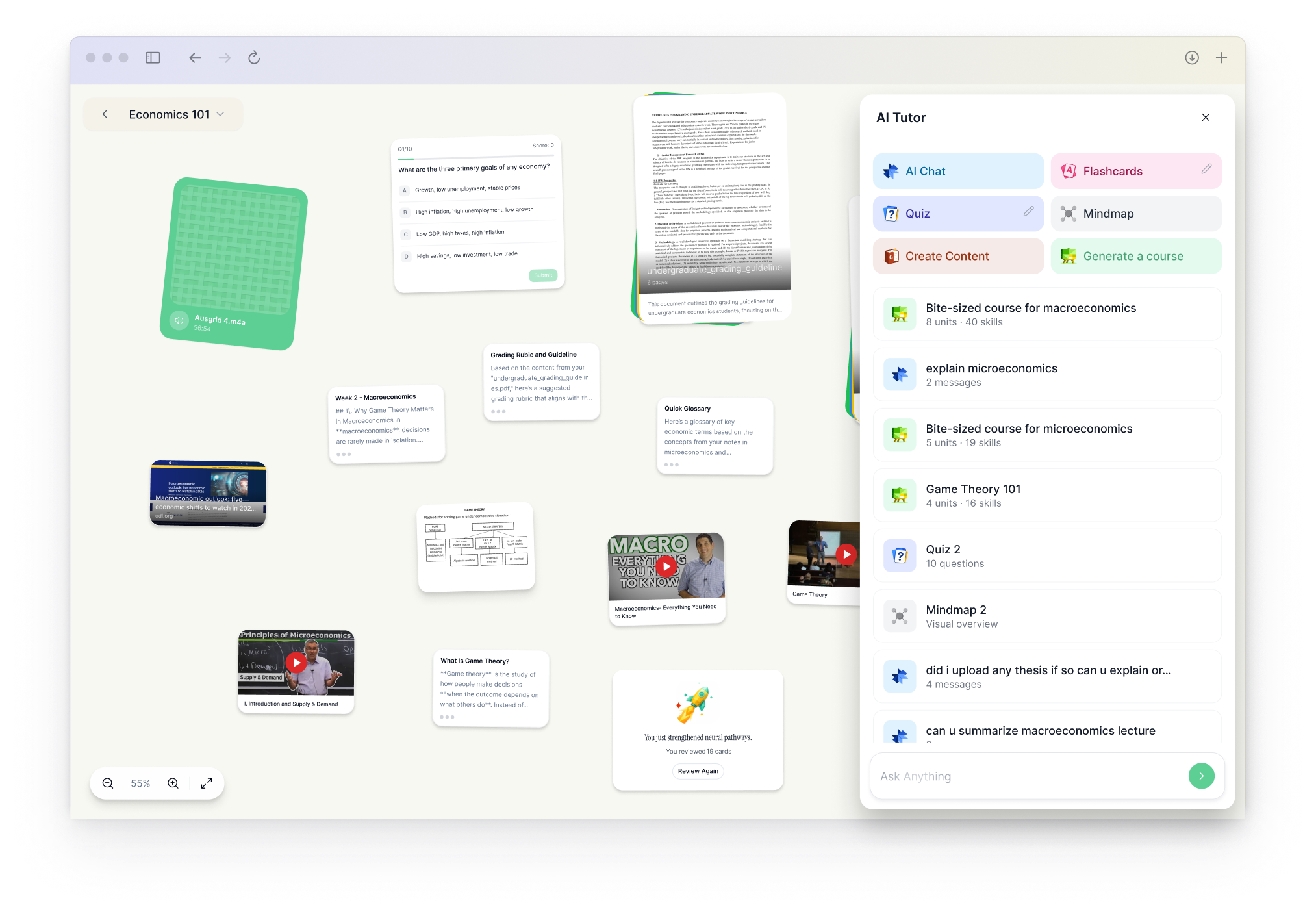
Build your study system earlier. Use Duetoday to generate notes and flashcards from your lectures at the start of each week, not the end of the semester. The night-before routine is easy when the groundwork is already done.
FAQ
Q: Is it okay to study until midnight the night before an exam? A: Generally not. The sleep you lose by staying up late costs more in exam performance than the marginal extra studying gains. Cut off studying by 10pm and prioritise 7–8 hours of sleep.
Q: What if I feel like I don’t know enough to stop studying? A: That feeling is normal and doesn’t necessarily reflect reality. Set a firm stop time before you start the evening. If you’ve done your preparation over the past weeks, stopping at 9–10pm is the right call even if it feels uncomfortable.
Q: Should I do a full practice quiz the night before? A: No — save full practice quizzes for earlier in the week. The night before, stick to flashcard review of weak areas and light summary reading.
Q: What if I have two exams in two days? A: Focus entirely on exam one the night before exam one. After exam one, do a quick brain dump of what you remember about exam two’s content, then use that as a guide for your review session that evening.
Q: Does caffeine help the night before an exam? A: Caffeine in the evening will delay sleep onset and reduce sleep quality, which hurts exam performance. Save it for the morning of the exam if you need it.