You’ve made study schedules before. Beautiful, colour-coded timetables that lasted exactly three days before life got in the way. The problem usually isn’t commitment — it’s that most study schedules are built on unrealistic assumptions about how studying actually works.
Here’s how to build one that holds up.
Try Duetoday free
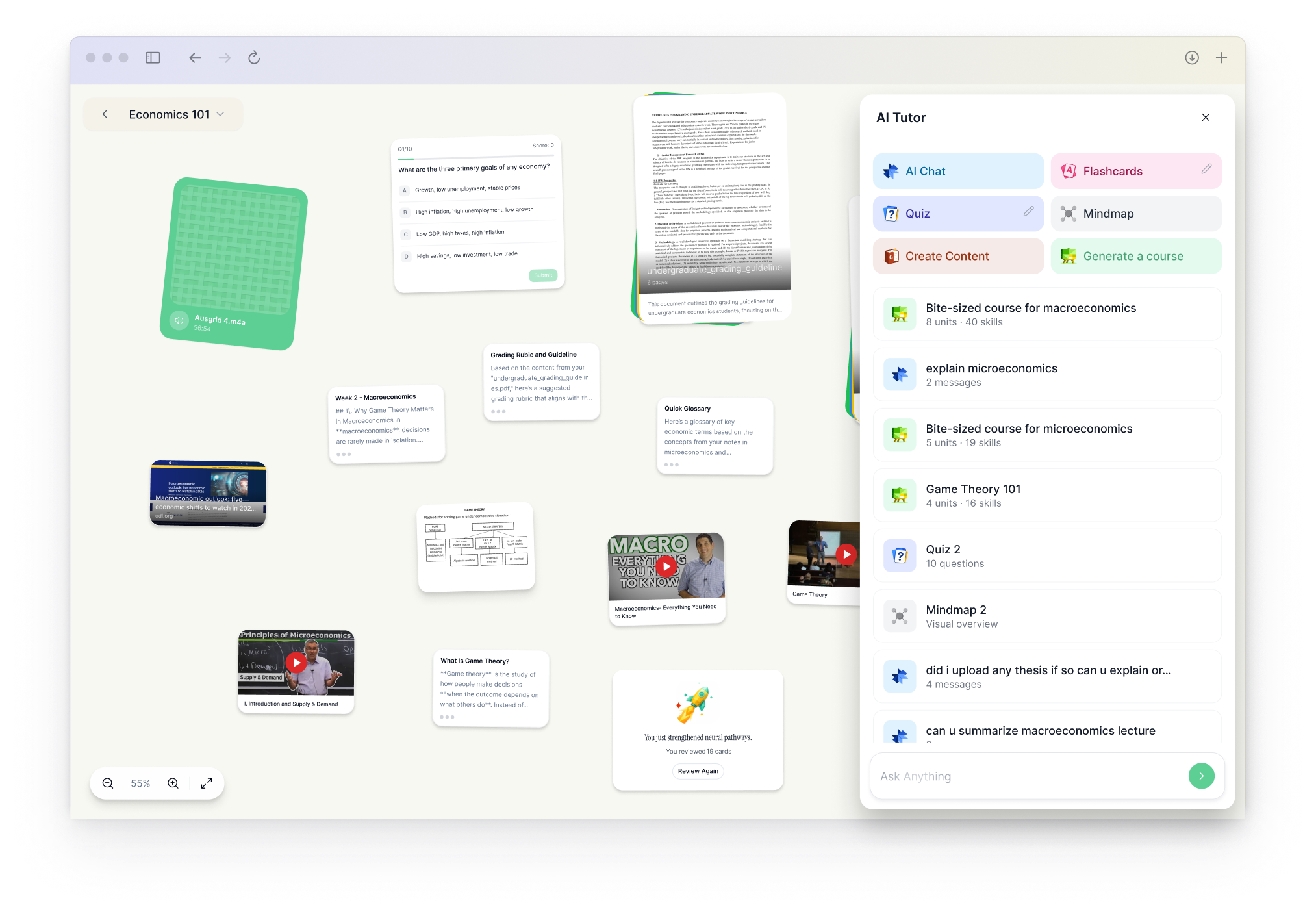
Turn your lectures, PDFs and YouTube videos into notes, flashcards and quizzes in seconds.
Get started free →Why Most Study Schedules Fail
Before building a better system, it helps to understand why standard schedules break down.
They’re too rigid. A schedule that requires 3 hours of studying every day with no variation assumes life is predictable. It isn’t. One late social night, one unexpected assignment, one bad mental health day, and the whole thing collapses.
They don’t account for energy levels. Scheduling complex problem-solving at 9pm when you’re exhausted is setting yourself up to fail.
They treat all subjects equally. You don’t need the same amount of time for every subject. A course you understand well needs less review than one you’re struggling with.
They have no buffer. Any schedule without slack time will eventually fall behind. And once it falls behind, it usually gets abandoned entirely.
Step 1: Map Your Fixed Commitments First
Open your calendar and block in everything that isn’t flexible: lectures, seminars, labs, work shifts, sports commitments, travel time.
These are your anchors. Everything else builds around them.
Step 2: Identify Your Productive Hours
Be honest with yourself. Are you a morning person who can do focused work at 7am? Or do you hit your stride at 10am and peak in the afternoon?
Match your hardest subjects to your highest-energy windows. Use lower-energy times for lighter tasks: reviewing flashcards, re-reading notes, organising materials.
Step 3: Audit Your Subjects by Difficulty and Exam Weight
For each subject, ask:
- How well do I currently understand this material?
- How much does this exam count toward my final grade?
- How many weeks until the exam?
Allocate study time proportionally. A difficult subject with a heavy exam weighting needs more time than an easy subject with a minor assessment.
Step 4: Schedule in Sessions, Not Hours
Don’t write “Study economics: 3 hours.” Write “Economics — complete week 4 flashcards and take practice quiz on market structures.” Specific tasks beat vague time blocks every time.

With Duetoday, you can break your course content into weekly modules. Upload your lecture slides at the start of each week, generate structured notes, and have a clear list of what to review. This makes your study sessions concrete rather than open-ended.
Step 5: Build in Recovery Buffers
For every five days of scheduled study, leave one day completely free from planned studying. This isn’t laziness — it’s strategic recovery that keeps the system sustainable over weeks.
Also build a “catch-up block” of 2–3 hours each week. If you miss a session or fall behind, this is where you recover without blowing up the rest of the schedule.
Step 6: Use Spaced Repetition Scheduling
The most powerful scheduling technique for exam prep is spaced repetition — reviewing material at increasing intervals as you get more confident with it.
Rather than re-reading the same notes every day, spaced repetition means you review a topic once, then again three days later, then a week later, then two weeks later. Each review takes less time than the last, and the material stays in long-term memory.
Duetoday’s flashcard system handles spaced repetition automatically — cards you know well come up less frequently, cards you struggle with come up more. This removes the need to manually schedule review sessions for individual topics.
Step 7: Review and Adjust Weekly
Every Sunday, spend 15 minutes reviewing the past week: Did you hit your sessions? Where did things slip? What’s coming up that changes your available time?
Adjust next week’s schedule accordingly. A good study schedule is a living document, not a fixed plan.
The Minimum Viable Schedule
If you’re overwhelmed and need a starting point:
- Three focused 90-minute sessions per subject per week — that’s typically enough for an average course load
- One weekly review session — go back over everything from that week while it’s still fresh
- Daily flashcard reviews — 10–15 minutes using Duetoday to stay on top of key concepts without needing a separate revision session
This is simpler than a full timetable and much easier to maintain.
FAQ
Q: How far in advance should I start a study schedule? A: Ideally four to six weeks before exams. Two weeks is workable. One week is crisis mode.
Q: Should I study every day? A: Most students study better with at least one day off per week. Daily studying without any rest leads to burnout, which destroys the schedule entirely.
Q: How long should each study session be? A: 90 minutes is the sweet spot for deep work. After 90 minutes, cognitive performance drops significantly. Take a 15-20 minute break before the next session.
Q: What if my schedule falls apart mid-semester? A: Don’t try to catch up with a punishing marathon session. Identify the most important missed content, use AI to generate quick catch-up notes, and reset the schedule for the weeks ahead. A reset is better than abandonment.
Q: How do I stay motivated to follow a schedule? A: Track your progress visibly. Seeing what you’ve completed is more motivating than looking at what’s left to do. Duetoday’s dashboard shows your activity across subjects, which helps you see momentum building over time.