The Pomodoro Technique has been popular since Francesco Cirillo developed it in the late 1980s. The premise is simple: work for 25 minutes, take a 5-minute break, repeat. Every four “pomodoros,” take a longer break of 15–30 minutes.
It’s been recommended in productivity blogs for 30 years. But does it actually work for university students studying complex material? The answer is nuanced.
Try Duetoday free
Turn your lectures, PDFs and YouTube videos into notes, flashcards and quizzes in seconds.
Get started free →What the Pomodoro Technique Gets Right
It forces you to start. Procrastination thrives on open-ended tasks. “Study for chemistry” is overwhelming. “Work on chemistry for the next 25 minutes” is manageable. The Pomodoro technique is excellent as an anti-procrastination tool.
It creates urgency. The timer creates a low-stakes version of time pressure. Knowing you have 25 minutes to cover a topic tends to focus attention.
It normalises breaks. Many students either take no breaks and burn out, or take unplanned breaks that stretch to an hour. Pomodoro makes structured breaks automatic.
It’s a good starting habit. For students who struggle to sit down and study at all, Pomodoro provides scaffolding that builds the habit of focused sessions.
Where It Falls Short for University Study
25 minutes is too short for deep work. Cognitive research suggests that meaningful focus on complex problems requires at least 45–90 minutes to reach full depth. The 25-minute timer interrupts flow state right as you’re getting into it.
Cal Newport, who studies deep work extensively, found that expert-level performance requires sustained focus of 60–90+ minutes. 25 minutes is warm-up territory for cognitively demanding tasks.
It doesn’t distinguish between task types. A 25-minute session works fine for flashcard review. It’s inadequate for writing an essay, working through a complex derivation, or understanding a new conceptual framework.
The 5-minute breaks are often too short to actually rest. Checking your phone for 5 minutes isn’t recovery — it keeps your brain in the same stimulated state.
Who Benefits Most From Pomodoro
The Pomodoro technique is most effective for:
- Students who struggle to start studying
- Tasks that are repetitive or require sustained effort without deep problem-solving
- Short review sessions (flashcard review, light re-reading)
- Students who tend to study for hours without breaks and burn out
It’s least effective for:
- Deep reading and comprehension of complex material
- Essay writing and argument construction
- Problem-solving that requires holding multiple concepts simultaneously
- Any task where flow state is valuable
A Better Alternative: Variable Focus Blocks
Rather than a fixed 25-minute timer, try calibrating session length to the task:
- Flashcard review: 15–25 minutes
- Reading and note-taking: 45–60 minutes
- Problem sets or essay writing: 60–90 minutes
- Practice exams: Full exam duration
Take real breaks of 10–20 minutes between sessions. Do something genuinely restorative: walk, eat, step outside.
How to Combine Pomodoro With AI Study Tools
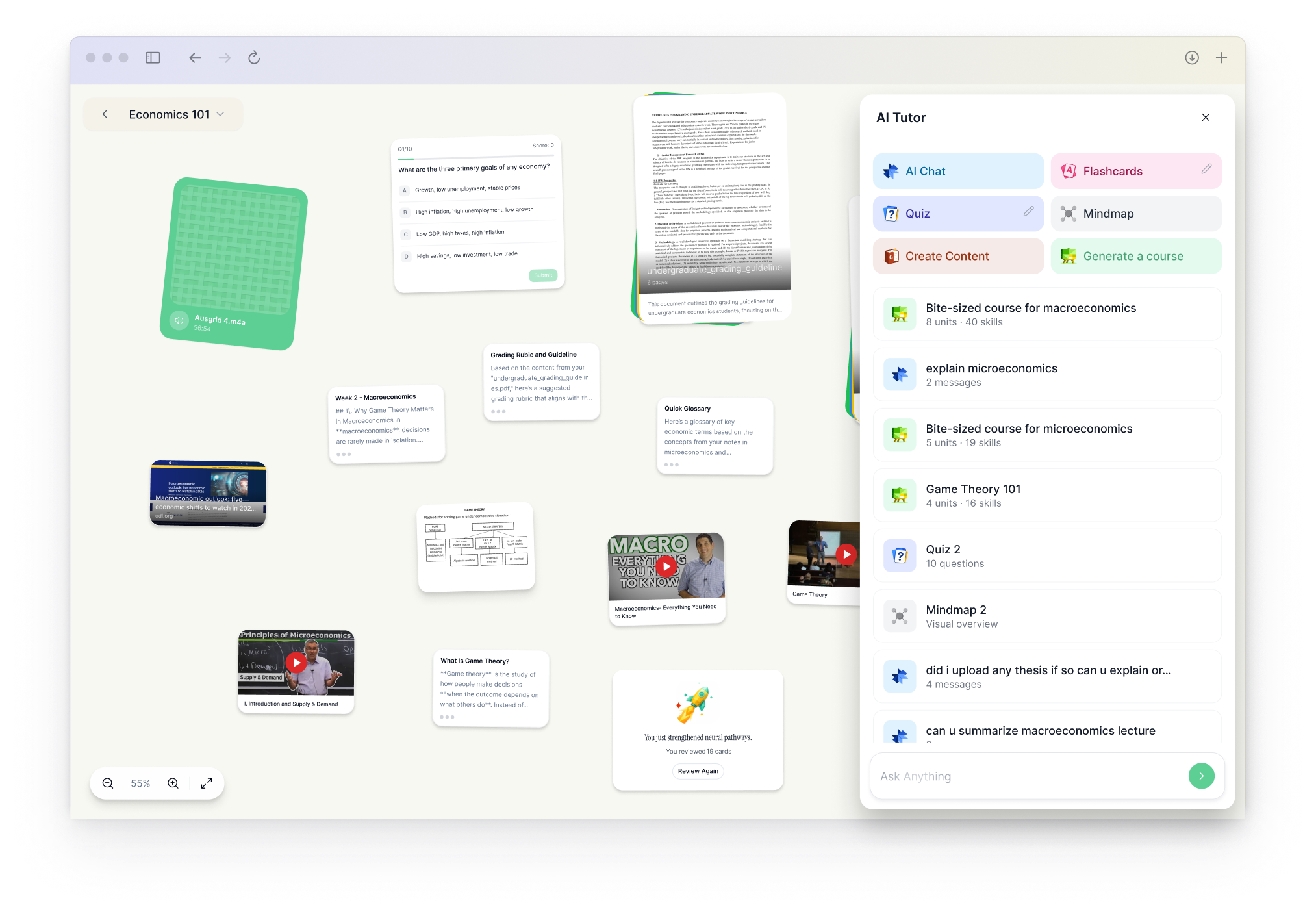
If you do use Pomodoro, pair each session with a specific task from your Duetoday:
- Session 1 (25 min): Review this week’s AI-generated flashcards for biology
- Session 2 (25 min): Read the AI summary of lectures 4–5
- Session 3 (25 min): Take a practice quiz on the week’s content
- Session 4 (25 min): Use the AI tutor to work through questions you got wrong
This removes the common Pomodoro failure mode of sitting down with no clear task and spending the session deciding what to study.
Duetoday’s practice quizzes are perfectly sized for single Pomodoro sessions. And AI-generated flashcard review sessions naturally fit the 15–25 minute window.
The Verdict
The Pomodoro technique is a useful tool, not a universal solution. Use it when you need help starting or when the task is suited to short sprints. Drop it — or extend the intervals — when you’re doing work that requires depth.
The best study system is one you’ll actually use. If Pomodoro helps you overcome procrastination and get your sessions started, it’s worth it. If the timer is interrupting flow and fragmenting your thinking, abandon it without guilt.
FAQ
Q: Should I use a physical timer or an app? A: Both work. A physical timer has the advantage of keeping your phone out of reach. Apps can have built-in session logging, which is useful for tracking study time.
Q: What if I’m in flow when the timer goes off? Should I stop? A: No — the research on flow suggests interrupting it has a significant cost. If you’re deep in productive work, override the timer and continue. Pomodoro is a guide, not a rigid rule.
Q: Can I use Pomodoro for exam revision in the final week? A: Yes — the structured timing works well for the high-frequency, varied review sessions typical of final week. Switch between subjects each block to leverage interleaving.
Q: Is 25 minutes long enough to make progress on a complex topic? A: For recall and review, yes. For first-time understanding of difficult material, typically not. Use longer blocks for initial learning, shorter blocks for review.
Q: How many Pomodoros should I do per day? A: 4–8 focused Pomodoros (2–4 hours of actual work) is realistic for most students. Beyond that, quality of attention drops significantly.