There are days when studying feels genuinely impossible. Not “a bit difficult” — genuinely impossible. You sit down, open your notes, and nothing happens. You scroll your phone for an hour and feel worse than when you started.
Waiting for motivation to appear is a trap. Motivation is a result of action, not a prerequisite for it. Here’s what actually works.
Try Duetoday free
Turn your lectures, PDFs and YouTube videos into notes, flashcards and quizzes in seconds.
Get started free →Understand Why Motivation Disappears
Before fixing the problem, it helps to understand it. Motivation typically drops when:
- The task feels overwhelming. “Study for finals” is paralyzing because it’s infinite. No clear start, no clear end.
- You’re mentally or physically exhausted. Trying to force focus when your brain is depleted doesn’t work.
- You’ve been avoiding it so long it has emotional weight. Guilt about not studying makes the task feel heavier than it actually is.
- The reward feels too distant. It’s hard to study for an exam six weeks away when doing nothing feels fine right now.
Each of these has a different solution.
Strategy 1: Make the Task Impossibly Small
When motivation is zero, your only goal is to start. Not to have a productive session — just to start.
Tell yourself you’ll study for exactly two minutes. Set a timer. Open your notes and read them.
This works because getting started is the hardest part. Once you’re actually doing the thing, resistance drops dramatically. The two-minute rule is a trick to bypass the activation energy needed to begin.

Duetoday’s flashcard review is perfect for this. You can literally do 5 cards in under 2 minutes. That’s a valid study session when motivation is at zero. You’re maintaining the habit and the momentum.
Strategy 2: Remove the Friction
If getting to your study materials requires effort — finding your notes, opening multiple apps, figuring out where you were — every bit of that friction compounds the resistance.
Remove it. Have everything pre-loaded: notes open, flashcard deck ready, today’s task written down before you sit down. Your only job when you sit down is to start working.
Strategy 3: Change Your Environment
Trying to study in a place you associate with relaxing — your bed, your sofa — is fighting your own conditioning. Your brain has learned to go into rest mode in those environments.
A different physical space changes the mental context. Library, coffee shop, empty seminar room — anywhere that isn’t your bed or sofa.
Strategy 4: Separate “I Don’t Feel Like It” From “I Can’t Do It”
These are different things. “I don’t feel like studying” is true almost every day, for almost every student. You don’t need to feel like it to do it.
The goal isn’t to feel motivated. The goal is to do 20 minutes of work despite not feeling like it. That’s a skill, and like all skills it improves with practice.
Strategy 5: Address the Real Problem
Sometimes zero motivation is a signal, not just laziness. If you haven’t been able to study properly for weeks, consider:
- Sleep debt: Cognitive function drops sharply when you’re sleep-deprived. More studying hours won’t help.
- Burnout: If you’ve been pushing hard for a long time without adequate rest, the system needs recovery, not more input.
- Mental health: Persistent inability to engage with tasks you normally care about can be a symptom of depression or anxiety. University counselling services exist for this.
If it’s burnout, the prescription is a day off, not pushing through. A day of genuine rest will produce better studying the next day than forcing through 8 hours of barely-there effort.
Strategy 6: Use AI to Reduce the Setup Cost
A significant portion of study procrastination is about the effort required to get organised. If you have to figure out what to study, find the relevant materials, create your own flashcards and summaries, the cognitive overhead before you’ve started any real learning is already high.
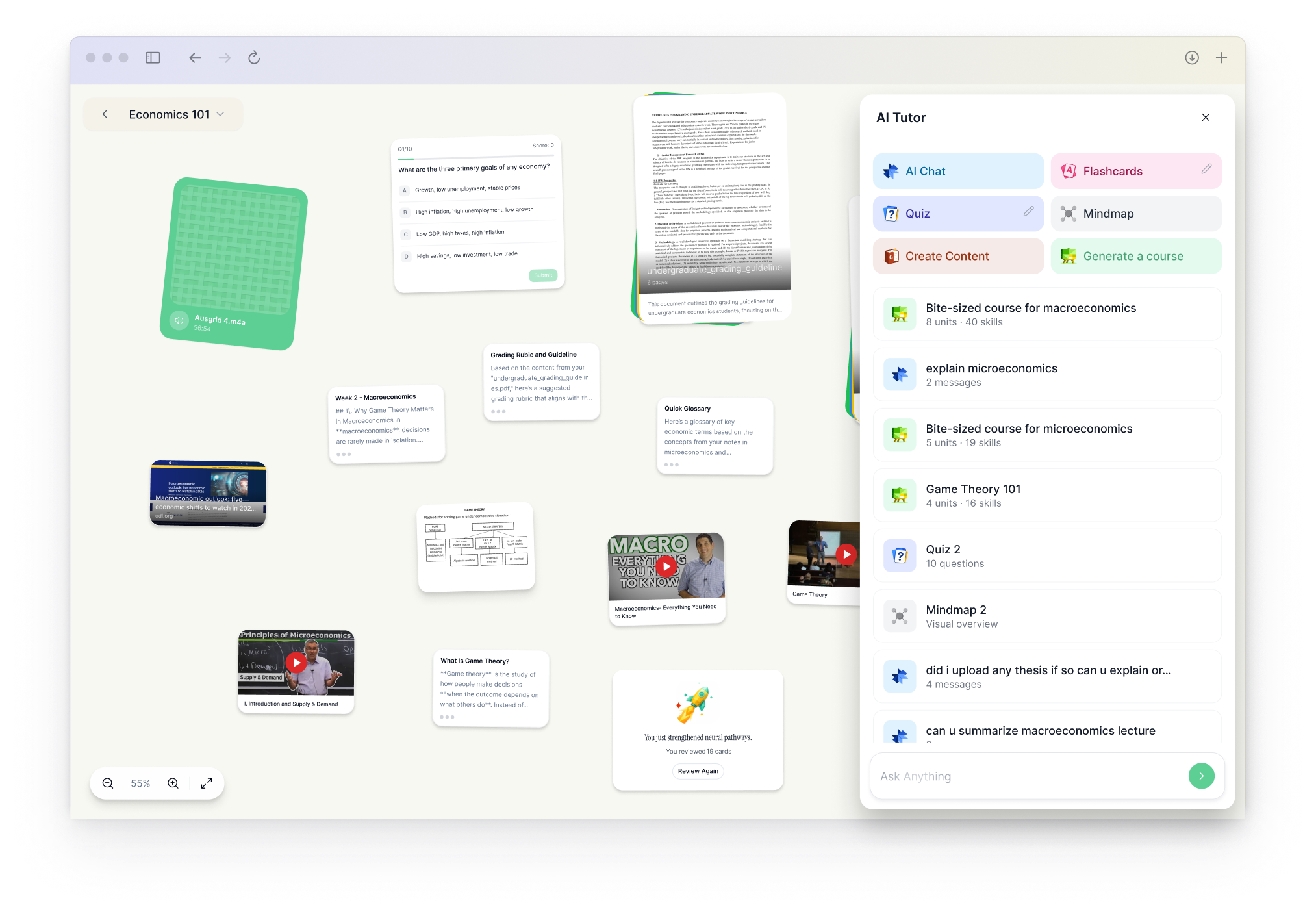
Duetoday eliminates most of this. Upload your lecture slides at the start of the week and it generates structured notes and flashcards automatically. When you sit down to study, the materials are already prepared and the task is clear: review these cards, take this quiz.
Less setup means less procrastination.
Strategy 7: Link Studying to Something Enjoyable
Habit stacking — pairing the thing you need to do with something you want to do — can make the triggering easier.
Study only at a specific coffee shop you like. Allow yourself to listen to a playlist you enjoy only while doing flashcard reviews. Create a small reward for completing each session.
These are Pavlovian, but they work.
FAQ
Q: Should I wait until I feel motivated to study? A: No. Motivation follows action, not the reverse. Starting despite not feeling motivated is how motivation eventually shows up.
Q: What if I study but can’t retain anything because I’m too distracted? A: A low-quality study session is better than no session. But if you genuinely cannot focus, a 20-minute nap or a 20-minute walk often resets your ability to concentrate better than pushing through.
Q: Is it okay to have a completely unproductive day sometimes? A: Yes. Occasional unproductive days are normal and human. The danger is when occasional becomes habitual. If you’re having more than two unproductive days per week regularly, it’s worth examining why.
Q: Does studying with friends help with motivation? A: For some people, yes — accountability and social environment help. For others, group study becomes social time with a study veneer. Know which type you are.
Q: What’s the fastest way to get into a study mindset? A: The two-minute start rule, removing phone from reach, changing environment, and having a clear first task pre-prepared. Combined, these reduce the barrier to starting to almost nothing.