Procrastination on assignments is one of the most universal student experiences. You have two weeks, then one week, then three days, then it’s the night before and you’re writing 2,000 words in a panic. You know it’s coming. You can’t seem to stop it.
The good news: procrastination is solvable. Not through willpower — through system design. Here’s what actually works.
Try Duetoday free
Turn your lectures, PDFs and YouTube videos into notes, flashcards and quizzes in seconds.
Get started free →Why You Actually Procrastinate
Most advice on procrastination focuses on time management. But research from Dr. Fuschia Sirois and others shows that procrastination is fundamentally an emotion regulation problem, not a time management problem.
You procrastinate on an assignment because starting it generates uncomfortable feelings: anxiety about failure, uncertainty about whether you can do it well, boredom, or the aversion to making the inevitable imperfection visible.
Avoidance temporarily relieves those feelings. So procrastination is rational in the short term — it works. Just at enormous long-term cost.
This means the solution isn’t “try harder” or “be more disciplined.” It’s about reducing the emotional friction associated with starting.
Tactic 1: Break the Assignment Into Micro-Tasks
“Write my economics essay” creates a vague, heavy mental object. Your brain doesn’t know where to begin, so it doesn’t.
“Open a document and write three sentences about the question” is concrete and completable in five minutes.
Break every assignment into the smallest possible sub-tasks. Not “research sources” — “find three journal articles on X.” Not “write introduction” — “write two sentences on why this question matters.”
When the next task is small and specific, starting is easy.
Tactic 2: Start With the Easiest Part, Not the Logical Starting Point
Conventional wisdom says start at the beginning. That’s often the hardest part — the introduction requires you to know what you’re arguing before you’ve argued it.
Start wherever you can. Write a middle section first. Draft the conclusion before the introduction. Get something on the page.
Momentum matters more than sequence. Once you’ve written something, you’re in the assignment. Starting is the barrier, not continuing.
Tactic 3: Use AI to Eliminate the Blank Page
One of the most anxiety-inducing moments in any assignment is staring at a blank document. Even a rough starting point dissolves the paralysis.
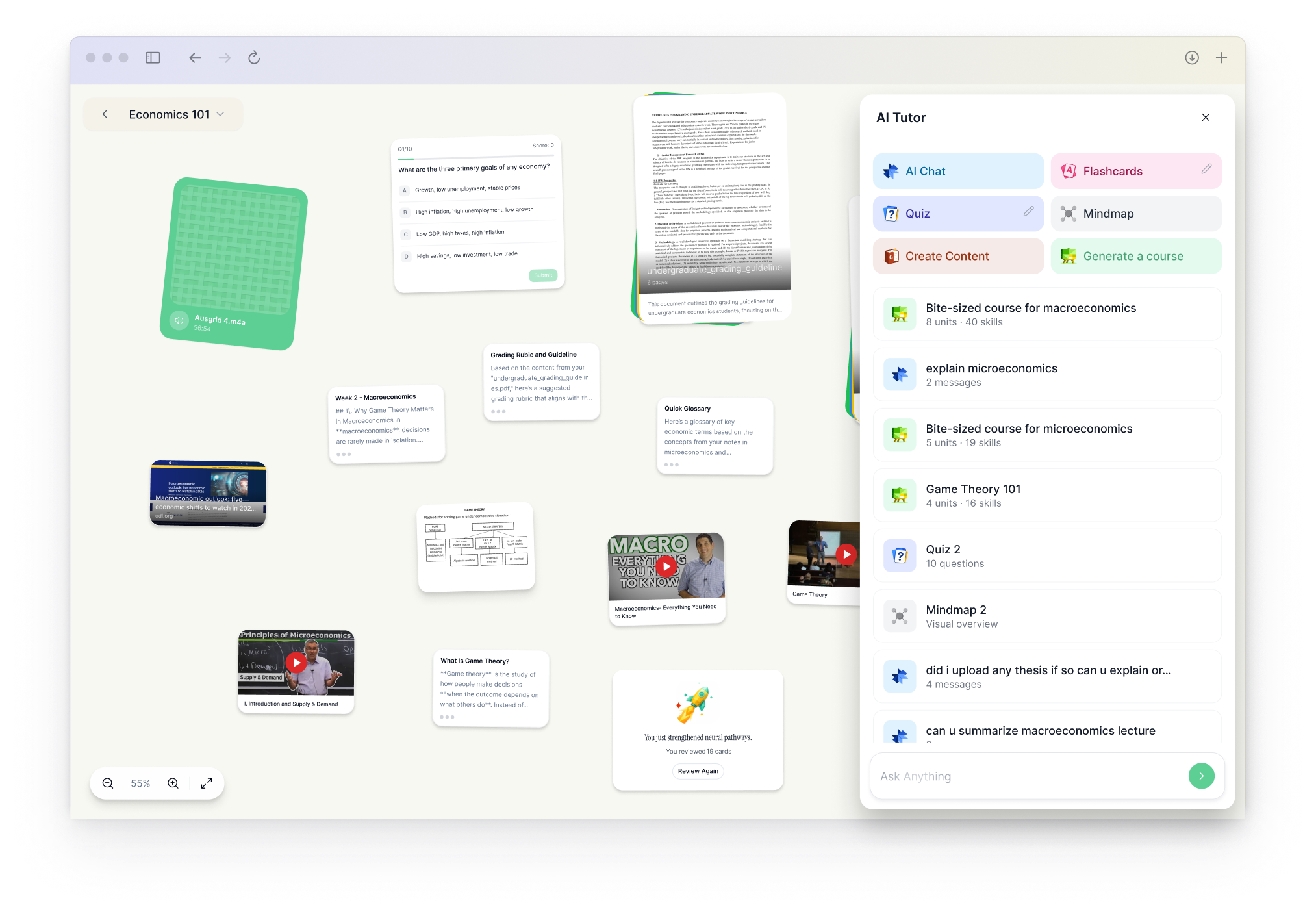
Use an AI tool to help you break the question down, identify key themes in your materials, or generate a rough outline. You’re not submitting the AI output — you’re using it to get unstuck. With Duetoday’s AI tutor, you can upload your reading list and ask it to help you understand the arguments before you start writing.
Tactic 4: Schedule the Start, Not the Completion
Procrastinators often set deadlines for completion (“I’ll finish the essay by Thursday”). This doesn’t help, because completion requires starting, and starting is the problem.
Instead, schedule a start session with a concrete minimum: “I will spend 20 minutes on this assignment on Tuesday at 4pm. My only goal is to have something written in a document.”
Scheduling the start removes the daily decision about when to begin.
Tactic 5: Create an Accountability Structure
Tell someone when you’re going to work on the assignment and what you’re going to have done by the end. This can be a friend, a study partner, or even a public commitment.
Commitment to an external audience creates social accountability that is often more motivating than internal resolve.
Tactic 6: Reduce the Cost of Starting
Procrastination grows when starting requires a lot of effort. Make it as easy as possible:
- Have the assignment document open on your desktop
- Have your sources already downloaded
- Have a clear task written at the top of the document: “Next: write the section on X”
When you sit down, your only job is to do the thing in front of you. Not to decide what to do — to do it.
Duetoday helps here by letting you organise all your sources and notes in one place. Rather than searching for PDFs across three folders, everything is centralised and searchable.
Tactic 7: Work in Short Committed Blocks
Set a timer for 25 minutes. During those 25 minutes, the assignment is the only thing open on your screen. No email, no messaging, no browser tabs.
After 25 minutes, stop — regardless of whether you feel like you’re in flow. Take a genuine break. Then decide whether to do another block.
This works because 25 minutes is a low enough commitment to say yes to, even when you’re resistant.
FAQ
Q: What if I work better under pressure and always leave things to the last minute? A: You may produce work under deadline pressure, but “better than I would have otherwise” is a low bar. Research consistently shows that work produced over multiple sessions with revision time is higher quality than work produced in a single marathon session.
Q: Is some procrastination normal? A: Yes. Everyone procrastinates sometimes. The goal isn’t to eliminate all avoidance behaviour — it’s to reduce the gap between assignment set and assignment started to a manageable size.
Q: What if I start but keep stopping? A: Use the 25-minute committed block and make your phone physically inaccessible (in another room, or in a bag). The most common reason people stop mid-session is notification interruption.
Q: Does perfectionism cause procrastination? A: Often, yes. The thought “I can’t start until I know exactly what I want to say” is perfectionism in disguise. Start imperfectly. Bad first drafts are infinitely better than no draft.
Q: Can AI help with procrastination on assignments? A: Indirectly, yes. AI reduces the setup cost and the blank page problem, which are two major sources of starting friction. Duetoday lets you quickly understand your source materials and get an outline together, which makes the assignment feel more manageable before you start writing.