



AI literacy for students

AI literacy for confident students

Help students understand how AI works, question what it produces, and use it responsibly with teachers still at the center.

Trusted by students and educators across leading campuses

Stanford UniversityYale UniversityUC BerkeleyUCLANYUUMass Amherst

AI literacy belongs inside instruction, not outside it.

Students already encounter AI tools everywhere. In school, the goal is not just access. The goal is to help them understand how AI works, where it can mislead them, and how to use it with judgment, confidence, and integrity.

AI literacy becomes meaningful when students learn to question outputs, improve prompts, compare ideas, revise their work, and keep their own thinking at the center.
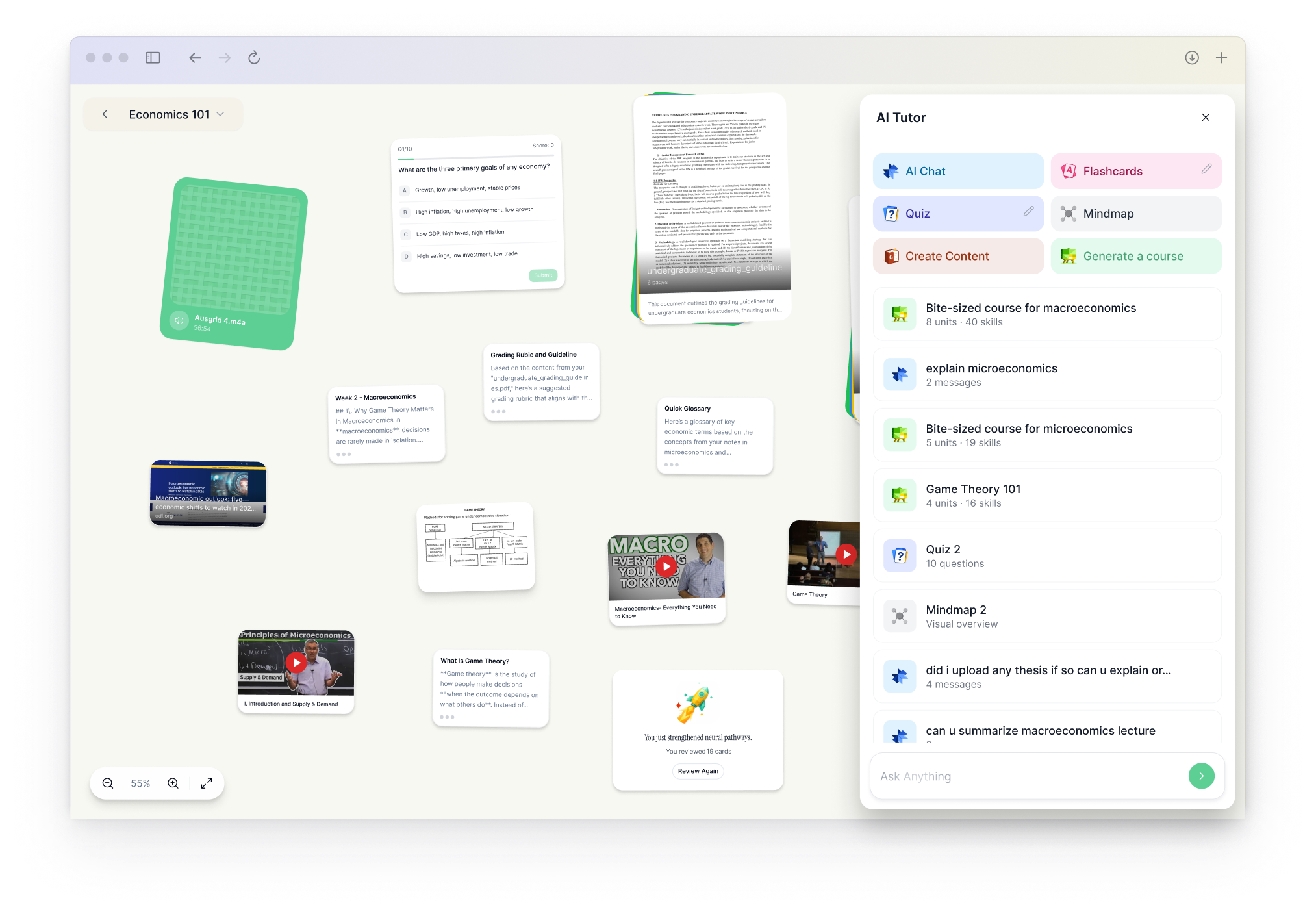
Duetoday workspace preview

How Duetoday supports AI literacy for students

Duetoday gives educators a practical way to bring responsible AI use into everyday instruction without losing sight of real learning.

01

Student-safe AI experiences

Create structured classroom workflows where AI supports learning, not shortcuts. Students can ask questions, revise ideas, and reflect with clear expectations in place.

02

Responsible-use guardrails

Build norms around citation, verification, prompt quality, and academic honesty so students understand where AI helps and where their own thinking still matters most.

03

Thinking-first routines

Use AI to spark explanation, comparison, revision, and self-checking instead of replacing the practice that develops real understanding.

04

Teacher visibility

Keep teachers at the center with guided implementation ideas, classroom-ready resources, and practical support for introducing AI literacy across subjects.

Don't be scared of AI. If you don't teach us AI skills or let us use tools that are safe, then we're not going to know how to use it in the future and it puts us behind.

Maren Student

Students should lead part of the AI literacy conversation.

The strongest AI literacy programs do not talk about students without listening to them. When schools hear directly from learners, they get a clearer picture of how AI is already shaping homework, revision, research, and confidence.

Use student examples, guided discussion, and classroom reflection to make AI literacy feel real instead of abstract.

Browse related articles

AI literacy for all learners

Students bring different learning needs and styles into the classroom. With the right support in place, all learners can build AI literacy in ways that are fair, safe, and instructionally sound.

Clear expectations

Students need explicit guidance on acceptable use, disclosure, and verification.

Accessible routines

Short, repeatable classroom routines make responsible AI use easier to teach and practice.

Human-centered teaching

AI works best when teachers remain the ones setting goals, context, and feedback.

Support for teachers, families, and students

Different audiences need different tools. These starting points are designed to help each group understand responsible AI use in practical terms.

For Teachers

AI literacy classroom starter

A practical introduction to what students should know about AI, how it works, and what responsible classroom use looks like.

Explore for teachers

Prompting and reflection routines

Help students move beyond one-line prompts with routines for drafting, checking outputs, and improving their own questions.

View prompt guide

AI in education guide

Use a broader guide to introduce benefits, limitations, classroom risks, and practical implementation considerations.

Read the guide

For Families

Family communication template

Share how AI is being used in class, what students are expected to do independently, and how families can support healthy habits at home.

Talk to us

Responsible AI use expectations

Outline when AI is appropriate, when disclosure matters, and why verification and original thinking still matter.

Review safeguards

Parent FAQ talking points

A simple framework for parent nights and school communication around safety, privacy, fairness, and learning outcomes.

See implementation ideas

For Students

AI introduction for learners

Give students a clear starting point for understanding how AI responds, where it can be wrong, and how to use it with judgment.

Start free

Prompt practice support

Encourage students to test, revise, and improve prompts so they learn how better questions produce better outputs.

Practice prompting

Study workflows with guardrails

Turn notes, lectures, and source material into active study tools while reinforcing responsible use, review, and revision habits.

Explore study tools

Support for AI literacy across districts, schools, and classrooms

Responsible AI use takes more than one lesson. It works best when expectations, communication, and classroom practice reinforce each other.

District guidance

Set a shared definition of responsible AI use, align expectations across schools, and create a practical rollout plan that staff can actually follow.

See district support

School implementation

Equip leaders with family communication, teacher training, and student-facing norms so AI literacy is introduced consistently.

Read implementation guide

Classroom practice

Give teachers ready-to-use activities, prompt routines, and study workflows that help students use AI as a learning partner rather than a shortcut.

Support classrooms

Questions schools ask about AI literacy

What does AI literacy mean for students?

AI literacy means students understand what AI can do, where it can be wrong, how to verify outputs, and how to use it responsibly without replacing their own thinking.

Why should schools teach AI literacy now?

Students are already using AI outside class. Schools need to give them structure, expectations, and judgment so they do not build habits around blind trust, plagiarism, or weak thinking.

How should teachers introduce AI in the classroom?

Start with guided routines: compare AI outputs, identify errors, revise prompts, discuss disclosure, and make it clear when AI supports learning versus when students must work independently.

How does Duetoday support responsible AI use?

Duetoday is positioned around student-safe workflows, teacher visibility, guided prompting, and study-oriented use cases that reinforce reflection, revision, and understanding.

Bring responsible AI to your classroom

Use Duetoday to support AI literacy with teacher guidance.

Help students build the habits they need to question outputs, think critically, and use AI as part of real learning.